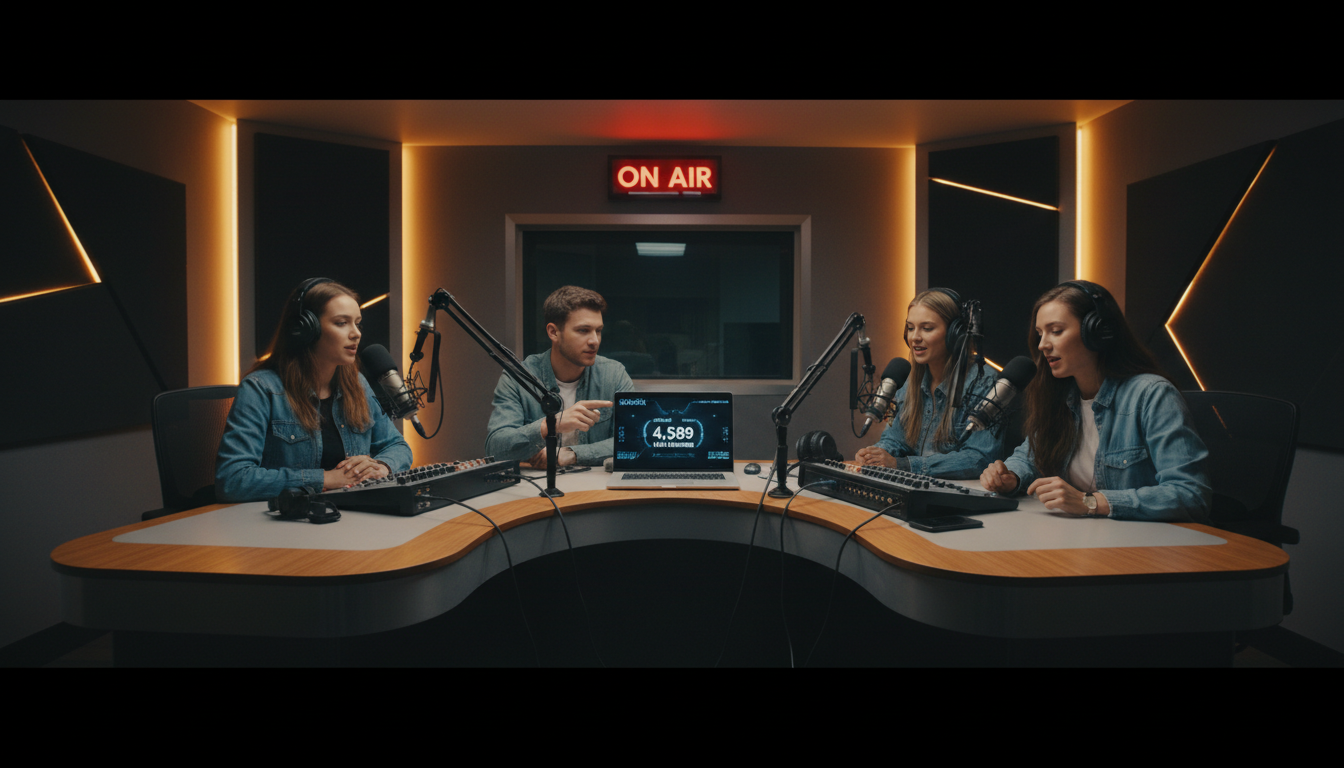
Running a college radio station is an incredible experience. It's a space for creative freedom, music discovery, and community building. But as soon as you decide to take your broadcast from the campus quad to the world wide web, you step into a complex and often intimidating legal landscape: music licensing, performance royalties, and digital compliance.
For many passionate station managers, DJs, and faculty advisors, these rules can feel like an insurmountable hurdle. What are royalties? Who is SoundExchange? What does the DMCA actually require? Failure to comply can lead to hefty fines and even the shutdown of your stream.
This guide is here to demystify the process. We'll break down the essential rules for college radio streaming in the United States for 2026 and beyond, providing a clear roadmap to keep your station legal, thriving, and broadcasting to the world. We'll cover everything from the performance rights organizations (PROs) you need to know, to the specific rules of the road for webcasting, and how choosing the right streaming host can make compliance almost effortless.
Understanding Digital Performance Royalties
At the heart of streaming compliance is the concept of royalties. When you play a song, multiple people who created it are legally entitled to get paid. For a webcaster, there are two primary types of royalties you must understand:
- Composition Royalties: This fee pays for the use of the song's underlying musical work—the notes, melodies, and lyrics. These royalties go to the songwriters and their publishers.
- Digital Performance Royalties (Sound Recording Royalties): This is the key one for streamers. This fee pays for the use of a specific recorded version of a song—the "master recording." These royalties go to the recording artists and the record label.
This distinction is critical. For decades, traditional AM/FM radio in the U.S. was only required to pay composition royalties. However, the law treats internet radio differently. When you stream a song online, it's considered a "digital public performance," which triggers the legal requirement to pay for both the composition and the sound recording.
The rates for these digital royalties are set by a government body called the Copyright Royalty Board (CRB). They periodically review and set the per-stream or per-listener-hour rates that non-interactive webcasters (like most college radio stations) must pay.
Pro Tip: Don't "Forget" About Royalties
Ignoring royalty obligations is not a viable strategy. Copyright holders are known to perform audits and seek significant financial damages from unlicensed stations. The fines for copyright infringement can easily reach thousands of dollars per song. Getting licensed from day one is the only way to operate legally and securely.
Who You Need to Pay: ASCAP, BMI, SESAC & SoundExchange
So you know you need to pay royalties, but to whom do you send the check? You acquire the rights to play music by obtaining licenses from Performing Rights Organizations (PROs). For a US-based webcaster, there are four main organizations you'll encounter.
For the Composition: ASCAP, BMI, SESAC & GMR
These organizations represent songwriters and music publishers. Because any given music collection will contain songs from all of their catalogs, most broadcasters need "blanket licenses" from all of them to be fully covered.
- ASCAP (American Society of Composers, Authors and Publishers)
- BMI (Broadcast Music, Inc.)
- SESAC (Society of European Stage Authors and Composers)
- GMR (Global Music Rights)
For the Sound Recording: SoundExchange
This is the most important organization for internet-only radio stations. SoundExchange is the sole entity in the United States designated to collect and distribute digital performance royalties for sound recordings. If you stream music online—whether through a college station, a hobbyist broadcast, or a commercial enterprise—you must have a license with SoundExchange. There is no legal way around it.
| Organization | Collects For | Who Gets Paid | Required for Webcasting? |
|---|---|---|---|
| ASCAP, BMI, SESAC | The Composition (Lyrics/Melody) | Songwriters & Publishers | Yes, for public performance. |
| SoundExchange | The Sound Recording (The Track) | Recording Artists & Record Labels | Absolutely, 100% Yes. |
Pro Tip: Check with Your University First
Before you rush to sign up, check with your university's legal department or student activities office. Many universities maintain campus-wide blanket licenses with ASCAP, BMI, and SESAC for public events, which may cover your station's composition royalty needs. However, they almost never cover the SoundExchange digital performance license, which will likely be the station's direct responsibility.
What is a Statutory License for Webcasters?
Imagine having to contact every record label for every song you wanted to play to negotiate a price. It would be impossible. Thankfully, U.S. Copyright Law provides a solution: the statutory license.
A statutory license allows certain types of webcasters to stream music without having to get permission from each copyright owner individually. Instead, you pay a set royalty rate (determined by the CRB) to SoundExchange, and you are granted a license "by statute" (by law) to play any song from their massive repertoire.
Who Qualifies? Non-Interactive Stations
This license is specifically for non-interactive webcasters. This means you operate like a traditional radio station: the listener can tune in or tune out, but they cannot choose the specific songs they hear, skip tracks, or create custom playlists. Most college radio stations, with their curated shows and playlists, fit perfectly into this category.
This is the opposite of an "interactive" service like Spotify Premium, which has to negotiate much more expensive, direct deals with labels. By using a tool like Shoutcast Net's powerful AutoDJ, you can easily create a scheduled, non-interactive broadcast that qualifies for the much more affordable statutory license.
Pro Tip: The License is a Package Deal
The statutory license is a privilege, not a free-for-all. To maintain it, you must agree to all of its terms. This includes not only paying the royalty fees but also adhering to strict playback rules set by the Digital Millennium Copyright Act (DMCA) and submitting detailed reports of what you played. We'll cover those next.
DMCA Compliance Checklist for Your Station
The Digital Millennium Copyright Act (DMCA) outlines the specific "rules of the road" you must follow to keep your statutory license. These rules are designed to prevent internet radio from replacing album sales or on-demand services. Here is a checklist of the most important requirements for a non-interactive station.
-
✅ Sound Recording Performance Complement
This is the most critical and complex rule. In any three-hour period, a station must not:
- Play more than four songs by the same featured artist (and not more than three of those consecutively).
- Play more than three songs from the same album (and not more than two of those consecutively).
-
✅ No Pre-Announcing
You cannot publish a playlist or announce to listeners the specific songs or artists that will be playing at a future time.
-
✅ Archived Program Rules
If you offer previously aired shows for on-demand listening, those archives must be at least 5 hours long and cannot be played in a continuous loop.
-
✅ Display Artist/Song/Album Information
Your stream player must display the title of the song, the name of the featured artist, and the title of the album for the currently playing song. All Shoutcast hosting and Icecast hosting plans at Shoutcast Net are configured to pass this metadata automatically.
-
✅ No "Push" Streaming
Listeners must actively choose to start the stream by clicking a "play" button. The stream cannot start automatically when they visit your page.
Pro Tip: Automate Your Compliance
Manually tracking the "Performance Complement" during a live show is nearly impossible. The best solution is to use station automation software or a streaming provider with a built-in scheduler. Shoutcast Net's AutoDJ feature is a perfect example. You can upload your music library, build playlists, and our system can be configured to automatically enforce these complex DMCA rotation rules, giving you peace of mind.
Data Reporting: What and When to Submit
Paying your licensing fees is only half the battle. To ensure the correct artists and labels get paid, SoundExchange requires you to submit detailed "Reports of Use." These reports are essentially logs of every single song you played and how many people heard it.
Failing to submit accurate and timely reports can jeopardize your license. This is often the most challenging part of compliance for small broadcasters, and it's where your choice of streaming host becomes absolutely critical.
What Data Do You Need to Report?
Your quarterly or monthly reports to SoundExchange must typically include:
- Song Title
- Featured Artist Name
- Album Title
- ISRC (International Standard Recording Code) - if available
- Aggregate Tuning Hours (ATH) - The total number of hours your listeners tuned in.
- Number of listeners for each track played.
How Do You Get This Data?
Trying to capture this information manually is a recipe for disaster. You need a streaming server that provides robust and accurate analytics. The Shoutcast Net control panel is designed for this exact purpose, giving you detailed, real-time and historical statistics on your listener counts. These logs are the raw data you need to compile your Reports of Use, a feature many budget or DIY hosting solutions lack.
Pro Tip: Start Logging from Day One
Don't wait until the reporting deadline to figure out how to track your plays. Keep meticulous records from the very first broadcast. Use a spreadsheet or a specialized logging service to record your playlists and cross-reference them with the listener data from your Shoutcast Net control panel. Being organized will save you countless hours of stress.
Choosing a Compliant Streaming Host (And Saving Money)
As you can see, the technical requirements for legal streaming are significant. Your choice of streaming host is not just about price and uptime; it's about whether they provide the tools you need to stay compliant and avoid legal trouble.
This is where Shoutcast Net offers a decisive advantage over both outdated legacy platforms and expensive, complex enterprise solutions. For a college station on a budget, value is key, but value must include compliance.
The Shoutcast Net Advantage vs. The Competition
Many broadcasters are lured in by enterprise platforms like Wowza, only to be shocked by their billing model. They charge on a per-viewer, per-hour basis. If your station has a popular show, your hosting bill could skyrocket from $50 to $500 overnight, penalizing you for your success. Legacy Shoutcast servers often lack the modern features, security, and reporting needed for today's environment.
Shoutcast Net provides a clear alternative: a simple, flat-rate monthly fee with up to 1,000 listeners and unmetered bandwidth. Our pricing starts at an incredibly low $4/month, so your bill is always predictable, allowing you to budget effectively and focus on your programming, not your server costs.
Key Features for a Compliant Station:
- Accurate Statistics: Our control panel provides the detailed listener data essential for SoundExchange reporting.
- Integrated AutoDJ: Our powerful AutoDJ system helps you manage playlists and automate DMCA rotation rules.
- Modern Protocol Support: We handle everything from SHOUTcast and Icecast to HLS and DASH. We can transcode **any stream protocols to any stream protocols (RTMP, RTSP, WebRTC, SRT, etc)**, ensuring your stream works everywhere.
- Universal Compatibility: Our philosophy is to let you **stream from any device to any device**, giving you maximum flexibility.
- Social Media Reach: Expand your audience effortlessly with our ability to **Restream to Facebook, Twitch, YouTube**.
- Guaranteed Performance: We offer 99.9% uptime, secure SSL streaming on all plans, and options for **very low latency 3 sec** streaming for live, interactive shows.
Navigating the world of streaming royalties can be complex, but it doesn't have to stop you. By understanding the rules and partnering with a host that's built for compliance, you can build a successful and legal internet radio station. Focus on your passion for music and community, and let us handle the technical foundation.
Ready to get on the air? Start your 7 days trial with Shoutcast Net and see how easy compliant streaming can be!
Pro Tip: The True Cost of "Cheap" Hosting
The best way to save money in the long run is to avoid thousands of dollars in copyright fines. A "cheap" host that doesn't provide reporting tools, a reliable AutoDJ, or stable metadata is a false economy. Investing a few dollars a month in a professional, compliant-focused host like Shoutcast Net is one of the smartest financial decisions your station can make.